


Zito's presentations at the Tourette Association of America's annual conference (TIC-CON) highlighted how sociological research can inform understanding, challenge stigma and support people with Tourette syndrome
Professor of Sociology Rena Zito co-led two research sessions at TIC-CON 2026: one examining stigma surrounding coprolalia (commonly known as ‘swearing tics’) and another exploring how people with Tourette syndrome make decisions about disclosing their diagnosis. Both sessions encouraged discussion among attendees about how sociological concepts and research findings align with their lived experiences, creating opportunities for dialogue between researchers and the Tourette community.
, the annual conference, brings together researchers, healthcare professionals, educators, advocates, and individuals with Tourette syndrome and their families. This diverse and interdisciplinary audience provides a unique opportunity to share research directly with those most affected by it while also informing the work of clinicians, educators, and others who support people with Tourette syndrome.
The presentation, Beyond “Only 10%”: Coprolalia, Stigma, and (Not) Being the Stereotype,聽presented with psychologist Michael Himle (University of Utah), examined how stereotypes about coprolalia (the involuntary utterance of socially inappropriate words or phrases) shape the ways people with Tourette syndrome understand, discuss, and experience their condition. The session also invited attendees to reflect on how the language used by individuals, professionals and organizations can either reinforce or challenge stigma surrounding coprolalia and other highly stigmatized tics.
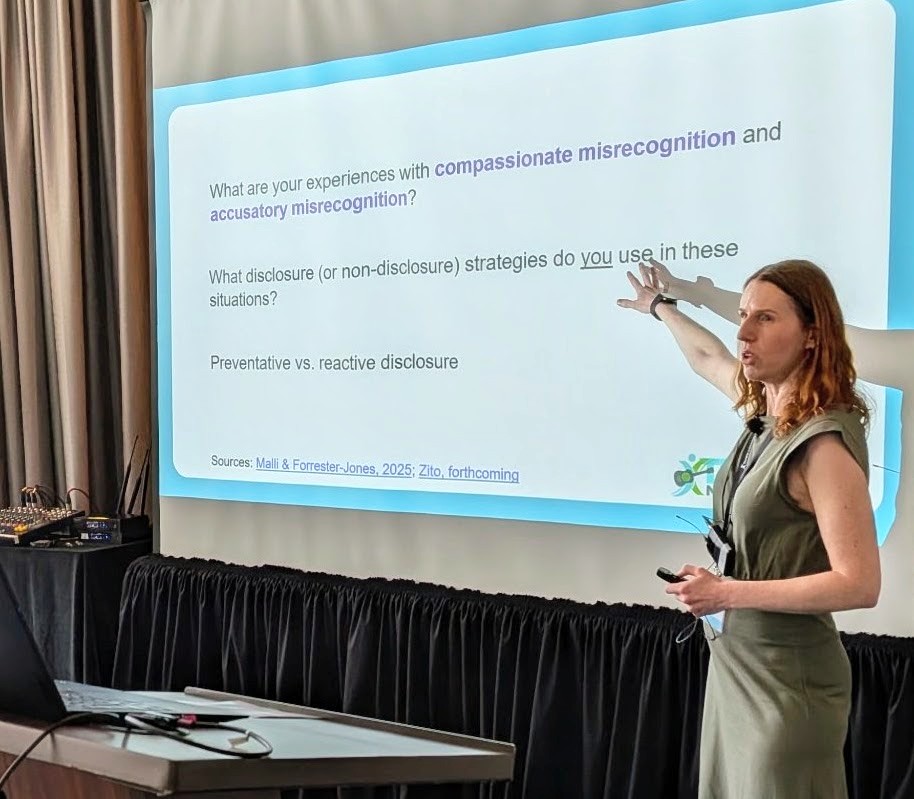
The presentation, Making Disclosure Work for You: Lessons from Social Science, presented with health communication specialist M.J. Dunne (Oregon Health & Science University), drew on Zito’s research alongside findings from across the social sciences to examine how people with both invisible and more readily apparent neurological conditions navigate decisions about disclosing their diagnoses. The session explored evidence-based strategies for informal disclosure in everyday interactions with strangers, coworkers, family members, friends, and others.