


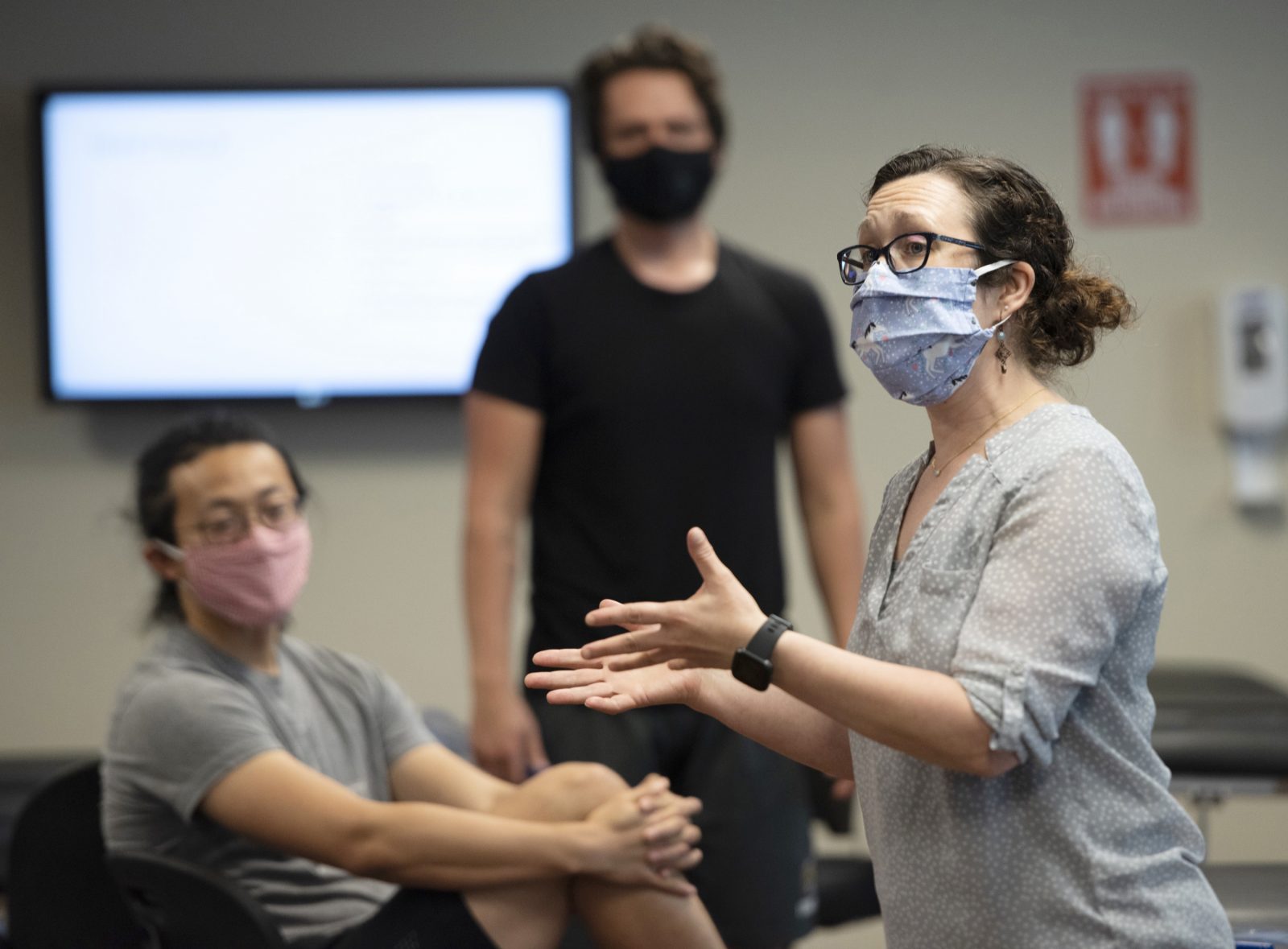
For the past 10 weeks, graduate students in Elon鈥檚 Doctor of Physical Therapy Education and Physician Assistant studies programs have been attending in-person classes at the school, donning masks and employing new cleaning measures.
Since the end of May, students in the Elon School of Health Sciences have been donning mask and adhering to new protocols during a cautious but effective return to in-person learning in the classroom.
Clad in masks and adjusting to COVID-19 safety measures, the 130 students in Elon鈥檚 Doctor of Physical Therapy Education and Physician Assistant Studies programs returned to the Gerald L. Francis Center to pursue classroom learning and work in the lab. Another 84 began clinical rotations in local health care settings in early to mid-June.

According to Becky Neiduski, dean of the School of Health Sciences, a return to in-person learning was an adjustment for students and faculty members, but now these new policies and procedures are a daily part of life.
鈥淲e鈥檝e been wearing our masks since we came back on May 26, and our students have become accustomed to it, we鈥檝e become accustomed to it, and it鈥檚 working well,鈥� Neiduski said.
Elon is preparing to welcome undergraduate students back to campus with the start of classes on Aug. 19. Throughout the summer, faculty and staff have been preparing for changes in how students, faculty and staff will interact with each other in the classroom, inside university buildings and in residence halls. A new face covering policy, disinfection guidelines, pre-semester COVID-19 testing and physical distancing requirements are just a few measures put in place to combat the spread of the virus.
Neiduski advises those returning to Elon鈥檚 campus to take some time and give themselves some space during the first few weeks to get used to doing things differently and to wearing a mask more often and for longer stretches of time.
鈥淚t is a change, but as you get used to the protocols and the procedures, and get used to wearing your mask, and quite frankly, when you look into the eyes of other people, you can see how happy they are to be back and to be around you,鈥� Neiduski said. 鈥淏e gentle with yourself, and start slowly. All of us over time transition and get used to being back in these spaces, and doing the things we need to do to keep ourselves and each other safe.鈥�
School of Health Sciences students have adopted new classroom habits, including adjusting the common practice of eating and drinking during class. Neiduski explains that students are now advised to eat before or after class, and to finish drinks such as coffee or soda before entering the classroom. Sealable water bottles are allowed in class, but must be stored in a student鈥檚 bag instead of on desktops.
Students have also learned to only drink when they are at least six feet away from each other, to carefully remove their masks before drinking and to sanitize their hands after drinking.
鈥淎fter the first couple of weeks, the students caught on and everyone did a really good job of changing what we do in our classrooms,鈥� Neiduski said.
Cleanliness has become an integral habit for most students, and Neiduski said the Francis Center is likely as clean as it has ever been with all students, faculty and staff chipping in to create a healthy and clean space. 鈥淲e hope that some of these habits will become habits we keep up with鈥� after the pandemic, Neiduski said.
Neiduski said she鈥檚 had multiple students return to the Francis Center and offer thanks for resuming in-person learning. There鈥檚 an understanding, based upon research, that wearing masks, washing hands and not touching your face can go a long way to greatly reduce the risk of spreading the virus on campus, she said.
鈥淢y mental health has been so greatly improved by being back with people, by being back with our students,鈥� Neiduski said. 鈥淚t is important for us to come back and resume this education together.鈥�